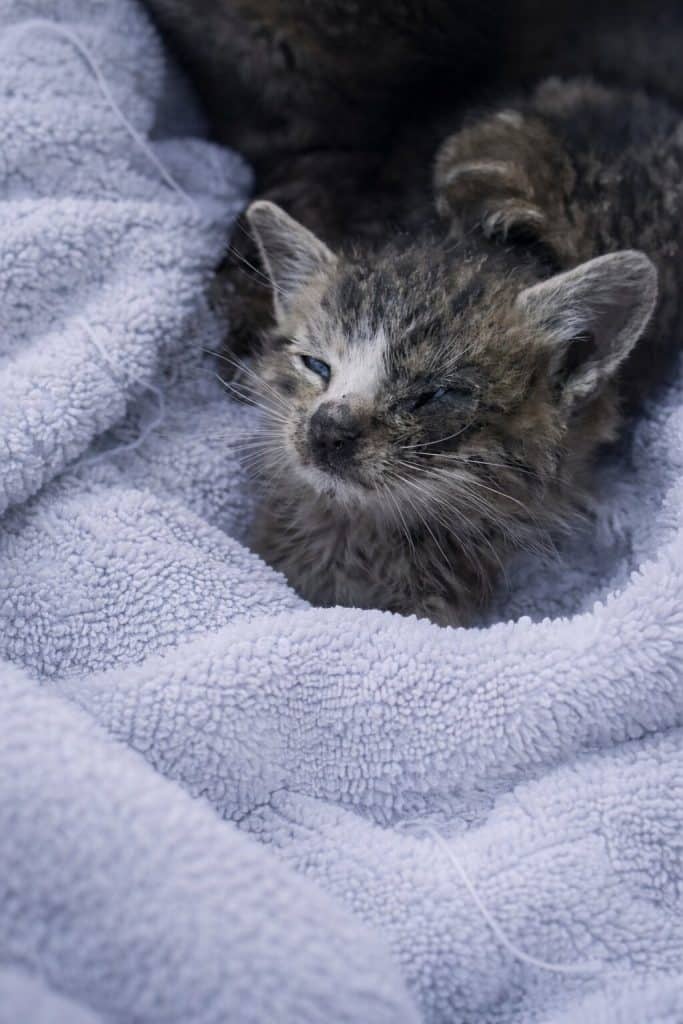
Sometimes rescue begins in the darkest places.
Boarded up basements. Abandoned buildings. Behind locked windows where no one thinks to look.
If you ever find kittens in terrible condition—anemic, dehydrated, underweight, covered in fleas, and too weak to cry—this guide will walk you through the first critical steps rescuers often take to assess and stabilize them.
This is not medical advice. Always consult a veterinarian about your specific situation.
But when minutes matter, knowing what to do first can save a life.
Step One: Warm Them First Always
Kittens under four weeks old cannot regulate their body temperature.
Video Emergency Rescue of Hypothermic Basement Kittens — Step by Step Stabilization
If they feel cold to the touch, they are likely hypothermic. When that happens, their organs begin shutting down. They are often hypoglycemic too, meaning their blood sugar is dangerously low.
Never feed a cold kitten.
Their body cannot digest food properly until warmed. Feeding too soon can cause aspiration or organ failure.
How to warm them safely: Place them in an incubator if available, or use a microwavable heating pad wrapped in fleece. Keep them dry. Allow them to huddle together. Warm gradually, not rapidly.
Check that their ears and paws feel warm before moving to the next step.
Step Two: Remove Fleas Immediately
Severe flea infestations can kill young kittens through blood loss alone.
Anemia in tiny kittens happens fast.
You may see:
– Pale gums
– Extreme weakness
– Cold limbs
– Lethargy
A gentle warm flea bath using diluted dish soap can help remove fleas. Work carefully around the face. Avoid getting water into the nose or mouth.
You may be shocked at how dark the bath water becomes. Dirt, feces, dried blood, and parasites often wash off together.
Dry thoroughly and return to warmth immediately.
Step Three: Clean and Treat the Eyes
Crusted eyes are often sealed shut with a mixture of discharge, bacteria, debris, and sometimes feces.
Use a sterile warm compress. Hold gently against the eye. Allow crusts to soften before wiping.
Never force them open.
Once cleaned, a veterinarian may prescribe antibiotic or antiviral eye ointments.
When a kitten starts protesting during cleaning, that is often a good sign. It means strength is returning.
Step Four: Address Dehydration
Dehydration alone can be fatal.
Signs include:
– Sticky gums
– Skin that does not snap back when gently pinched
– Sunken eyes
Veterinarians often administer warm subcutaneous fluids under the skin. If you rescue frequently, ask your vet for hands-on training before ever attempting this yourself.
Step Five: Slow Careful Feeding
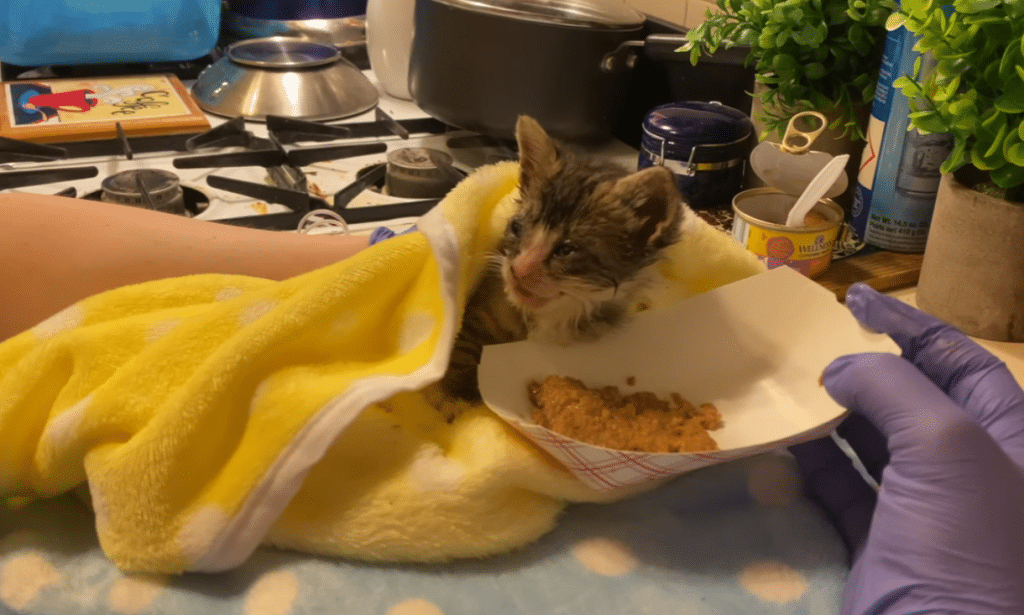
If kittens are too weak to eat on their own, syringe feeding may be necessary.
A common rescue mixture may include:
– Wet kitten food
– Kitten milk replacer
– High-calorie nutritional gel
Feed slowly. Only a few milliliters at a time. Ensure they swallow properly. Watch closely for choking.
Never rush feeding. Stability matters more than speed.
Step Six: Repeat With Patience
Each kitten must go through every step individually.
Warmth. Flea removal. Eye care. Fluids. Feeding.
It is exhausting work.
But the transformation can happen right before your eyes.
A kitten that could not lift its head may begin to protest. A silent body may begin to purr. Closed eyes may open.
The Step People Forget: Trap Neuter Return
No rescue is complete without addressing the source.
A single unspayed female cat can have multiple litters per year. Without intervention, the cycle continues.
Trap Neuter Return programs are critical to preventing more kittens from suffering outdoors. Stabilize the babies, but also trap and sterilize the mother if possible.
Prevention saves more lives than emergency care alone.