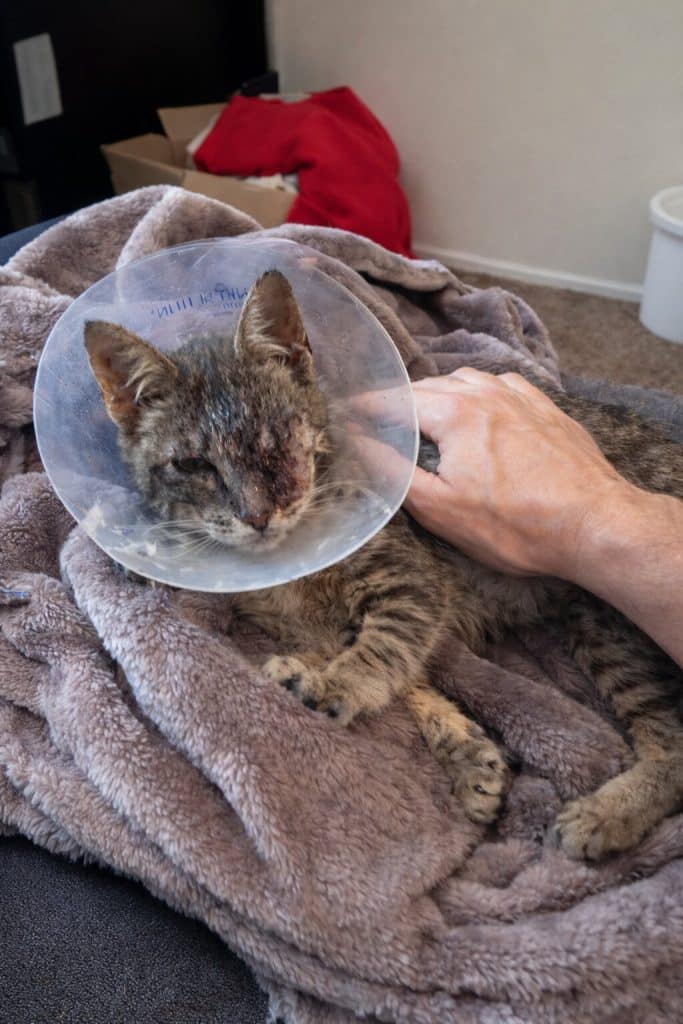
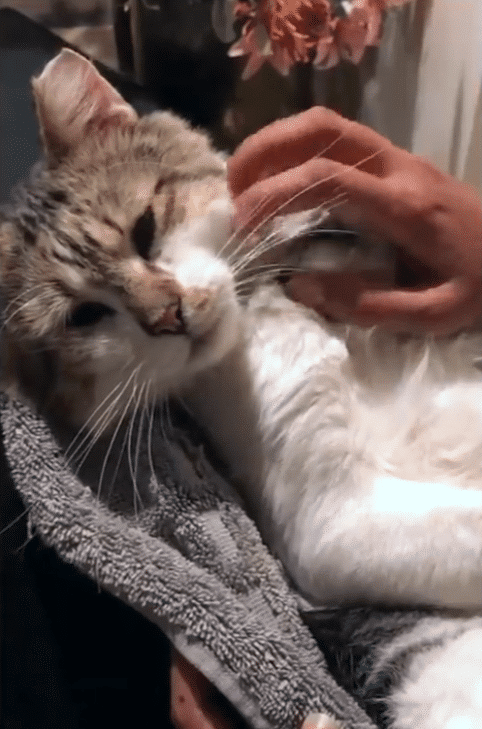
Mani, a tiny kitten, was discovered on the street in a dire state. His eye was severely injured, and his frail body showed signs of malnutrition. Having never felt the warmth of a human hand, Mani was too weak to resist when the rescue team took him in. His future appeared bleak, and his suffering was immense.
The rescuers understood that without immediate medical attention, Mani would not survive, so they quickly transported him to the clinic for urgent care.
Emergency Surgery and Painful Recovery
At the clinic, Mani underwent emergency surgery to remove his severely damaged eye. The procedure was complex and costly, but it was his only chance at survival. Despite the agony and trauma, Mani demonstrated a remarkable will to live, showcasing his resilience in the face of unimaginable hardship. His path to recovery would be lengthy, but the spark of life in his eyes was undeniable.
Video: Mani’s Journey – From Suffering to Love, and the Fight for a Better Future
As Mani began his recovery, his true personality started to emerge. Despite everything he had endured, he was incredibly sweet and developed a distinctive, endearing meow. He formed a close bond with Garfield, a larger cat who became his “big brother,” and built peaceful relationships with other rescue cats, including Fetti and Storm.
One of the most extraordinary aspects of Mani’s journey was his impact on a shy, anxious kitten named Lionel. He took Lionel under his wing, providing comfort and companionship. Through Mani’s gentle demeanor, Lionel began to trust people and gain confidence. Mani had transformed from a mere survivor into a guide, helping others heal as he had.
The Challenges of Rescue and the Mission of Flatbush Cats
The video illustrates the immense pressure faced by rescue workers, who must make heartbreaking decisions about which animals to save and which must remain on the streets due to limited resources. The emotional burden on those dedicated to rescuing animals is overwhelming, yet they persist in their mission.
The rescue team recognized that merely rescuing cats and finding shelter for them was insufficient to tackle the overwhelming feral cat crisis. Thousands of cats continued to suffer, reproducing uncontrollably, and living harsh lives outdoors. A more sustainable solution was essential.
Flatbush Cats shifted its focus to the TNR (Trap-Neuter-Return) program. By capturing feral cats, neutering them, and returning them to their original habitats, the team aimed to break the endless cycle of overpopulation and suffering. This strategy not only aided individual cats but also contributed to decreasing the overall stray cat population in the community.
In addition to TNR, Flatbush Cats prioritized providing accessible and affordable spaying and neutering services to the community. By making these services readily available, they could prevent the birth of unwanted kittens and address the root of the feral cat issue.